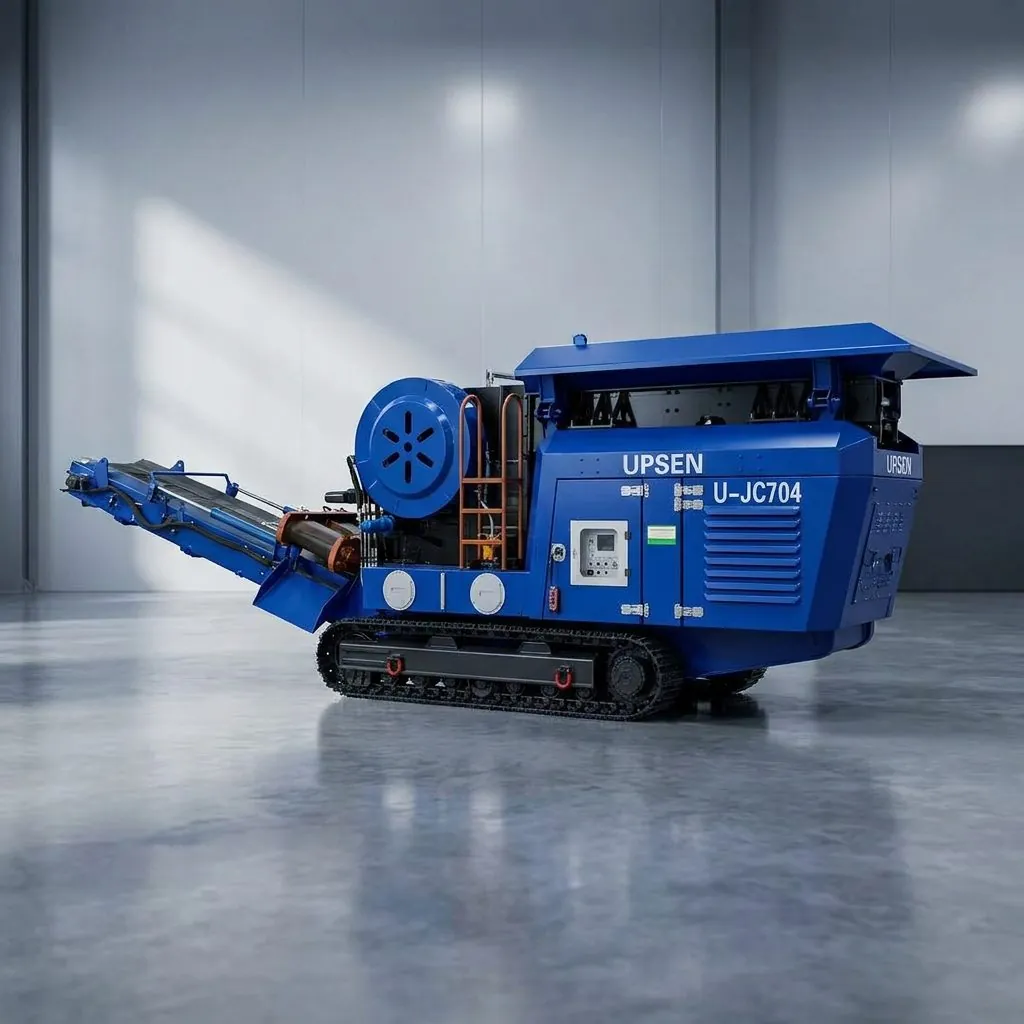
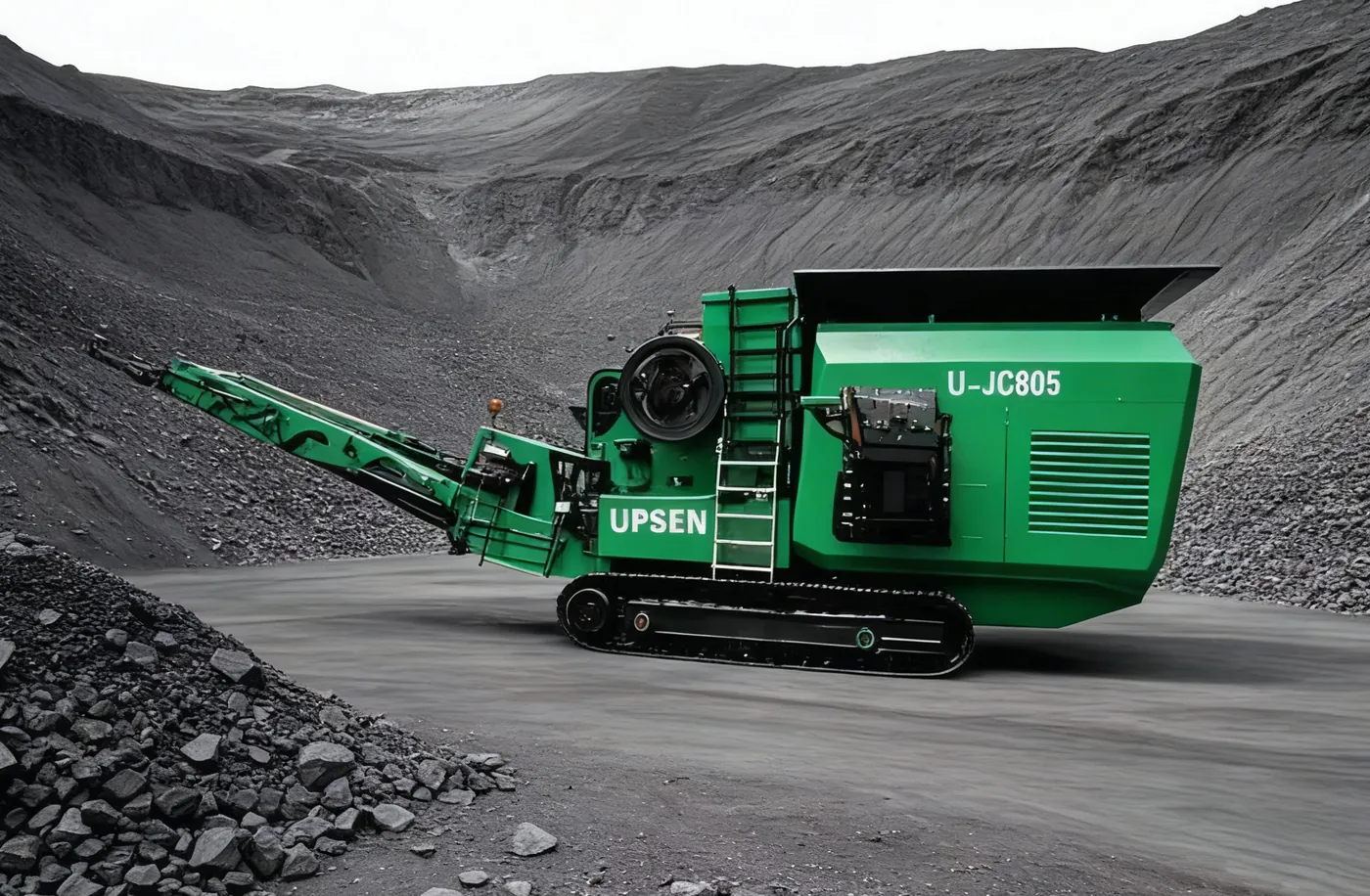
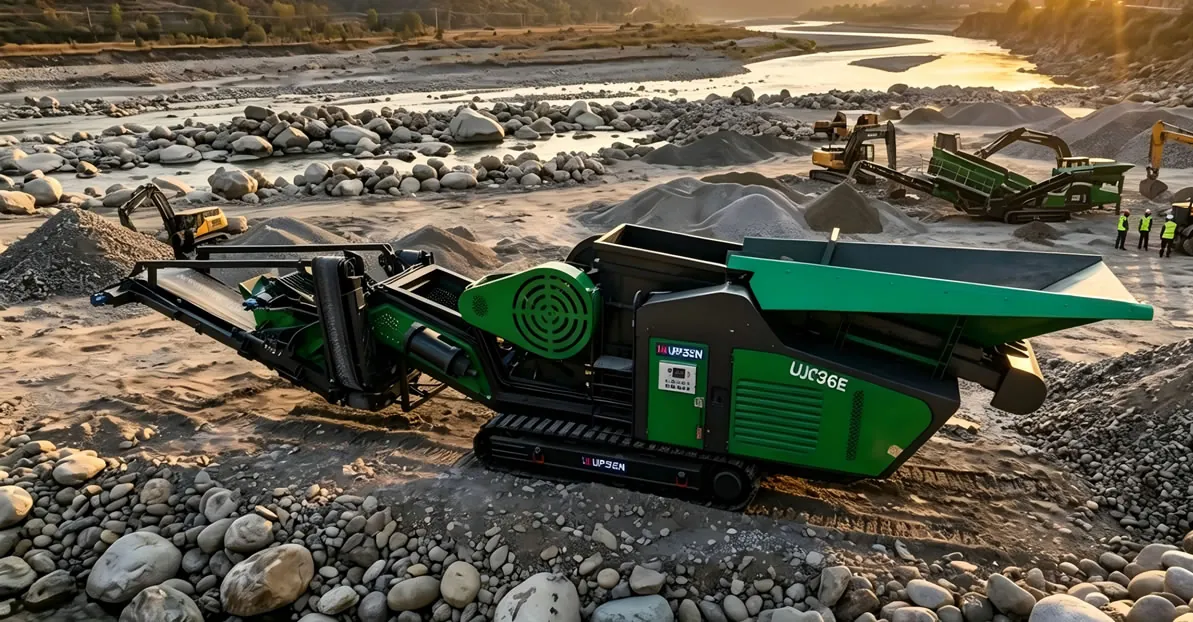
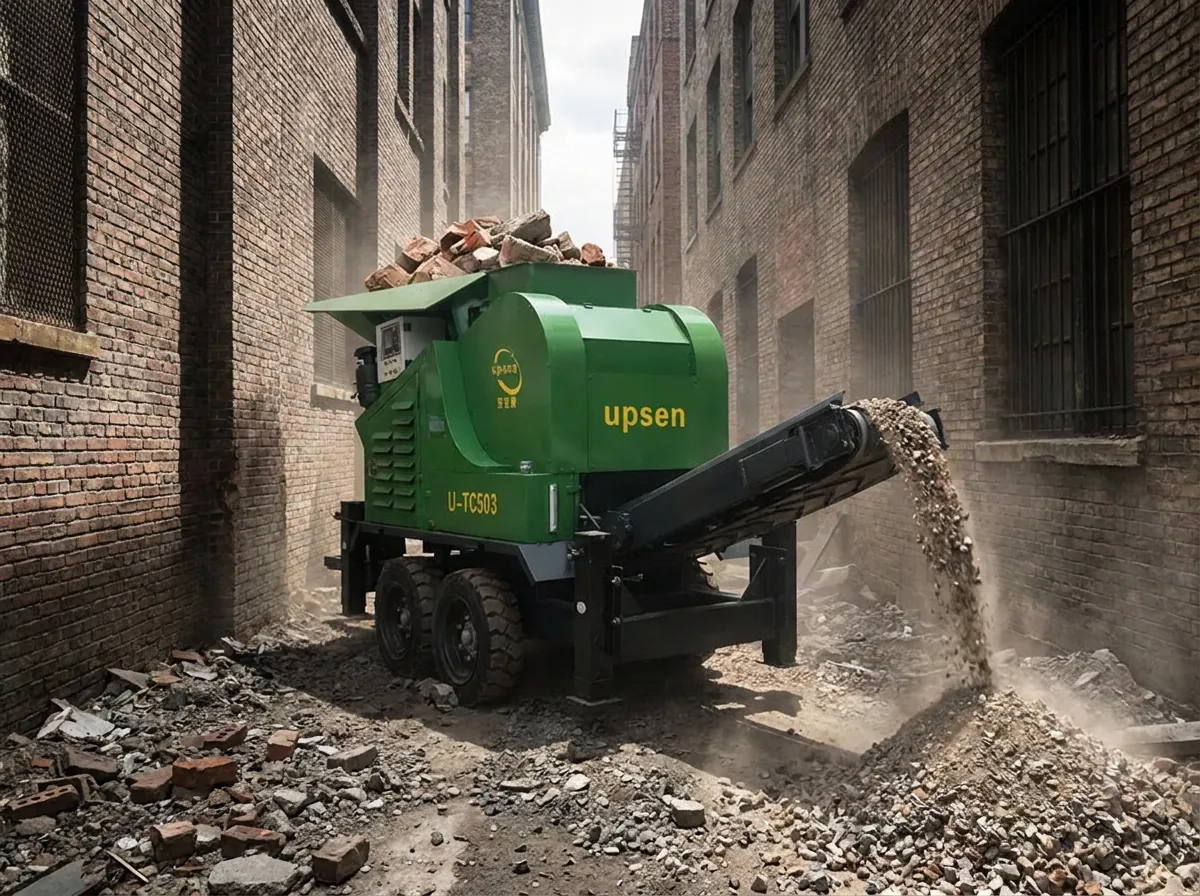
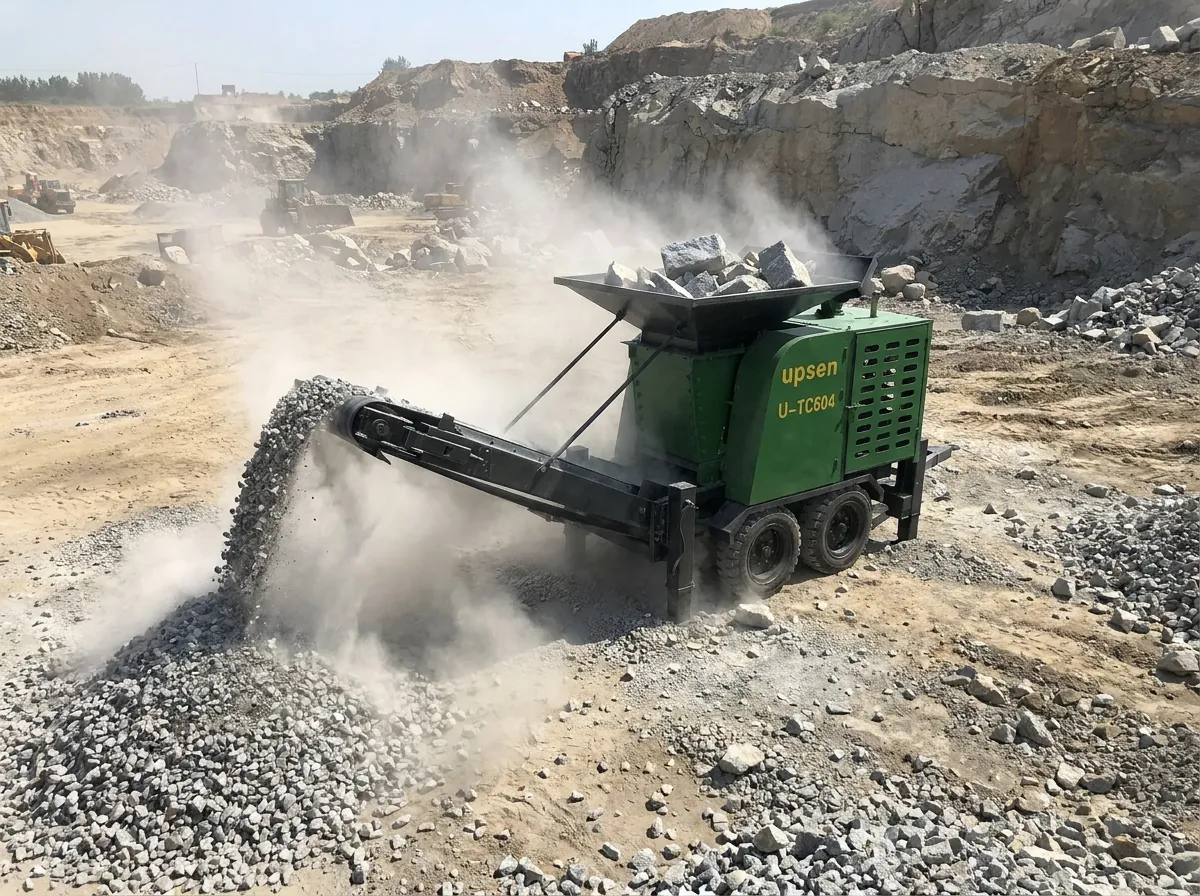
14 Models Available
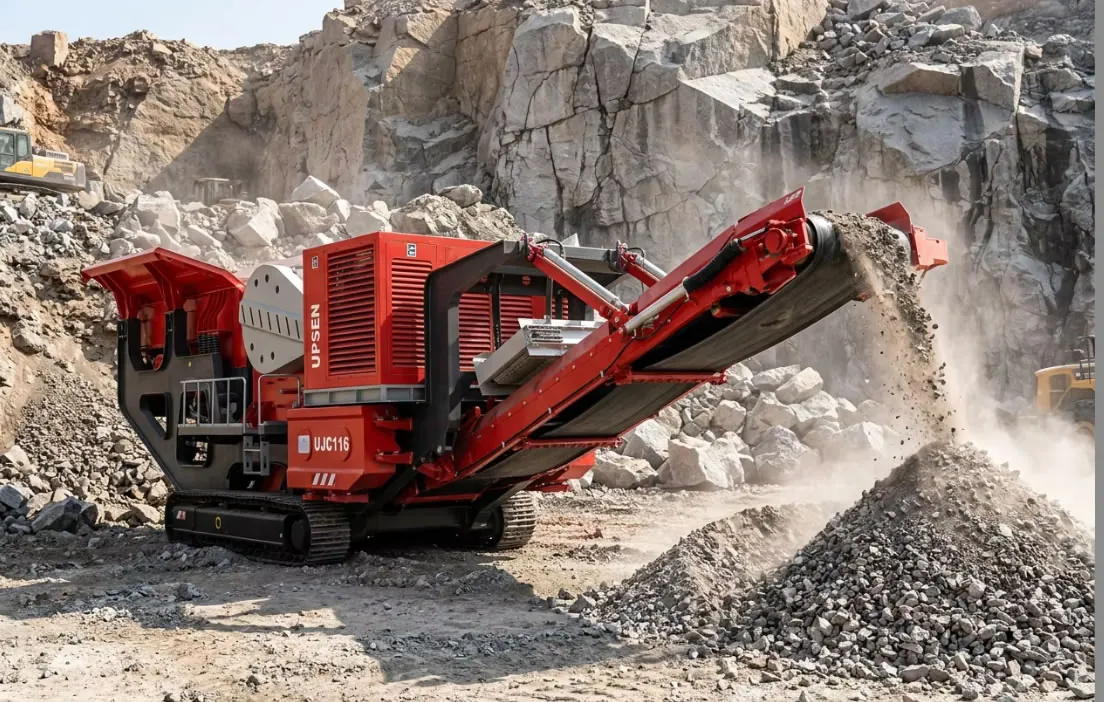
UPSEN (Henan Fangda Industrial) has manufactured tracked mobile crushing and screening equipment since 2010. The range on this page covers 14 mobile crusher models from 6 t/h to 300 t/h in three families: tracked jaw crushers for primary crushing of hard rock and reinforced demolition concrete, tracked impact crushers for cubical shaping and clean concrete / asphalt recycling, and towable trailer crushers for tight-access and rental work.
Every UPSEN mobile crusher is diesel-driven (Cummins, Perkins or Deutz), operated by a single wireless remote control, and can be fitted with a magnetic separator to pull rebar off the discharge belt. Paired with our mobile screeners, shredders and conveyors, they build complete on-site crushing lines. Machines come with EU conformity documentation and are delivered to 80+ countries with OEM parts support — learn more about UPSEN.
Not sure which model fits your job? Send us your material and daily tonnage target.
Ask Carlsen on WhatsAppA stationary plant makes sense when the pit is fixed for decades and trucking is cheap. Most jobs are not like that. A quarry face moves. A demolition contract lasts weeks. A recycling yard needs to process mixed concrete this month and asphalt the next.
That is the job of a mobile crusher: feed, crush, often screen, and stockpile from one machine that can be walked or towed to the next pad — instead of trucking raw material to a fixed plant.
Output is aggregate you can sell, reuse as sub-base, or feed into concrete and asphalt plants. Oversized pieces recirculate until they pass the screen. You are not “just breaking rock” — you are making a graded product next to the excavation.


The process is the same on every serious plant. The difference is how well each step is controlled.
1
A vibrating grizzly feeder meters material into the chamber. Dump too fast and you choke the crusher and spike fuel use; starve it and throughput collapses. The feeder is doing the real work of protecting the chamber.
2
Material enters a jaw or impact chamber. A jaw compresses rock between a fixed and a moving plate — primary work on hard, blocky feed. An impact crusher throws material against blow bars and aprons, which is why it is the usual choice when you need cubical shape or are recycling concrete and asphalt.
3
On demolition jobs a magnet over the discharge belt lifts rebar and mesh before metal reaches the stockpile or the screener. UPSEN plants can be fitted with this as an option. Skip it on clean quarry rock; do not skip it on reinforced concrete.
4
Many setups discharge onto a mobile screener rather than crushing in a single pass. The screen splits sizes and oversize returns to the crusher. That closed circuit is how you get a consistent 0-40 mm, 0-20 mm or whatever spec the job demands.
5
Stacker conveyors throw finished product into piles and a wheeled loader ships it out. The whole chain — feed, crush, screen, stack — sits on one tracked platform, or on two or three machines that crawl as the face advances.
Setup on a prepared pad is measured in minutes to a few hours, not days of civil work. That is the practical difference versus a fixed plant: no foundation pour, no long overland conveyor to a distant hopper.
UPSEN plants are diesel-hydraulic, with Cummins, Perkins or Deutz engines depending on model and market. One wireless remote covers tracking, feeding and crusher control, so a single operator can walk the machine and run production without climbing into a cab for every adjustment.
Both mechanisms are available in the UPSEN tracked range, so the right answer depends on your material — not on what we happen to sell. The two differences that matter most are rebar tolerance and wear cost on abrasive rock.
Compression crushing between a fixed and a moving jaw plate. The moving jaw squeezes feed until it fractures, and the discharge gap is fully adjustable.
Reduction by high-speed rotor and blow bars that shatter feed against impact aprons — the action that produces well-graded, cubical aggregate.
1
Is your feed reinforced or abrasive?
Hard rock or rebar-laced concrete → start with a jaw crusher (UJC series).
2
Is cubical shape the spec?
Clean concrete, asphalt or medium-hard rock needing well-graded product → impact crusher (UIC80).
3
Do you move between sites?
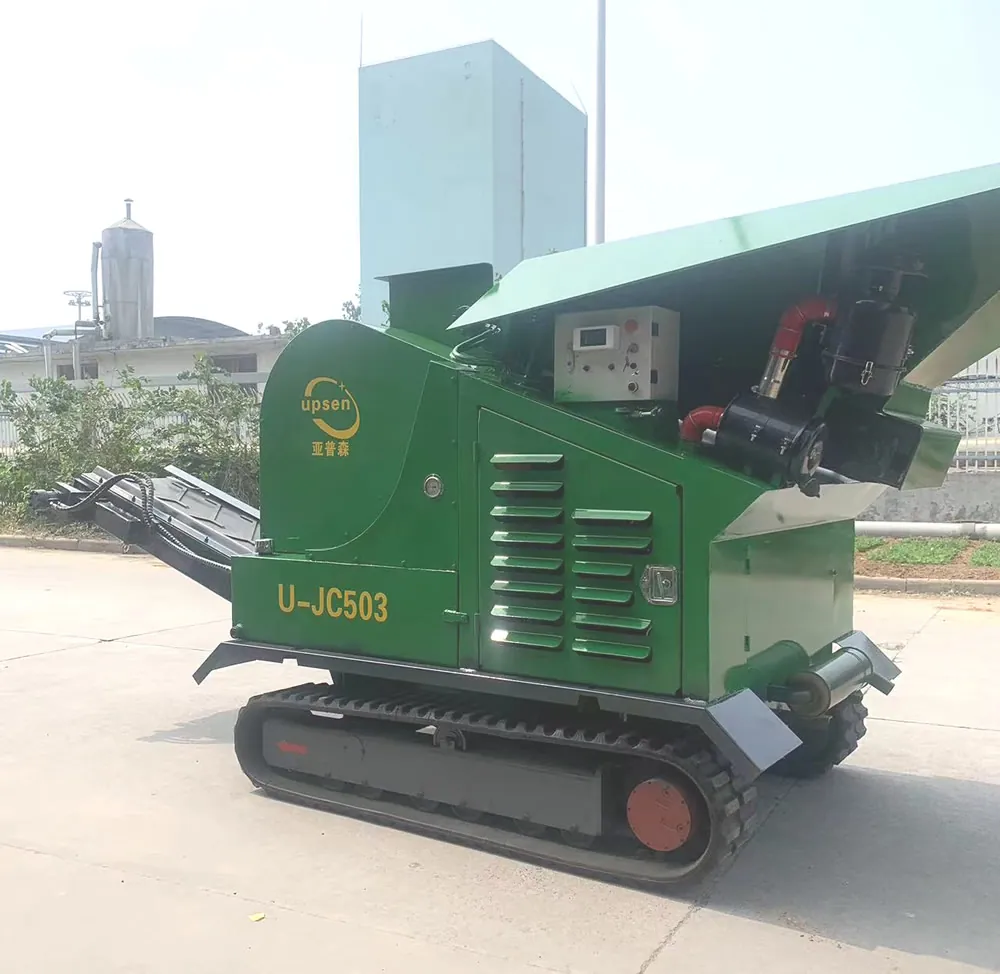
Frequent moves and tight access favour the compact UJC425 / UJC503 or UTC trailer crushers.
4
Running a full line?
Pair any crusher with a UPSEN mobile screener to close the circuit on site.
If the job is “turn this demolished building into clean 0-20 / 20-40”, start with a tracked impactor rather than a jaw. If the feed is large, abrasive or very hard, a jaw is stage one.
Not every site can take a 40-ton tracked plant. Urban demolition, indoor slabs, short rental jobs and yards with poor access need something you can tow in, set on outriggers and pull out the same week.
UPSEN trailer crushers — UTC503 and UTC604 — cover the compact, tight-access end of the range, for contractors who need on-site reduction without a quarry-scale machine. They are the rental part of the same family, not a scaled-down toy.
A mobile cone is a secondary or tertiary machine: smaller feed, tight closed-side setting, uniform product for concrete and asphalt mixes. UPSEN’s current mobile range is jaw, impact and trailer — if your flowsheet needs a cone stage, say so on the enquiry and the line is designed around your product spec.
Mobile screening units do not crush, they classify. Almost every serious mobile crushing job ends up with a screener in the circuit once more than one product size is required. Running a crusher with no screen and hoping the closed-side setting alone delivers a spec is how you end up with a dirty single-size pile and a lot of recirculating oversize.
Still undecided? Send photos of your material and your target tonnage to Carlsen on WhatsApp +86 15333827088 — we match the model to the job, not the other way around.
Typical material, the recommended UPSEN model and its rated capacity range. Actual throughput varies with feed size, moisture and the closed-side setting — our engineers confirm figures for your material before you order.
| Application / Material | Recommended Models | Capacity Range | Crushing Principle |
|---|---|---|---|
| Quarry rock — granite, basalt, river stone | UJC106 / UJC116 / UJC906 | 100-300 t/h | Jaw (compression) |
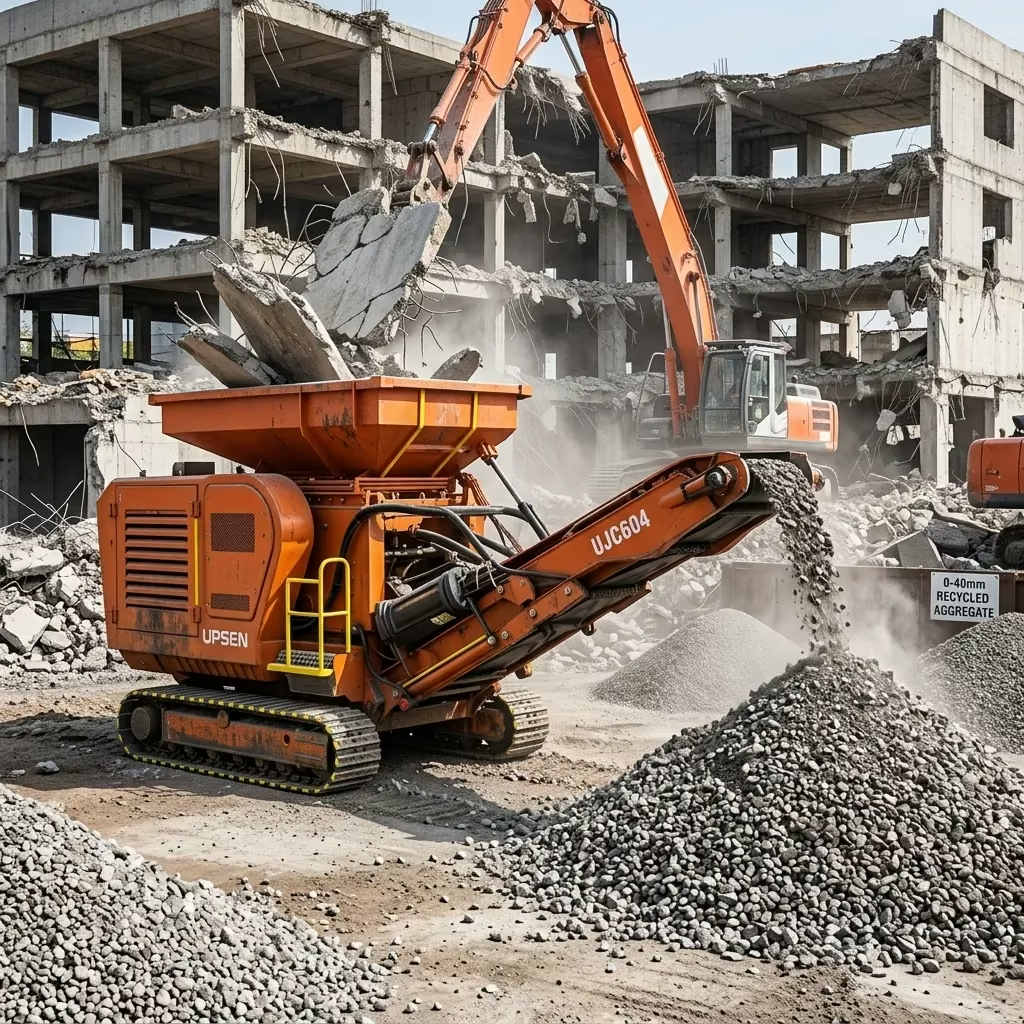
| Demolition concrete with rebar | UJC604 / UJC704 / UJC805 | 30-150 t/h | Jaw + magnetic separator |
| Clean concrete / asphalt (RAP) recycling | UIC80 | 30-80 t/h | Impact (cubical shaping) |
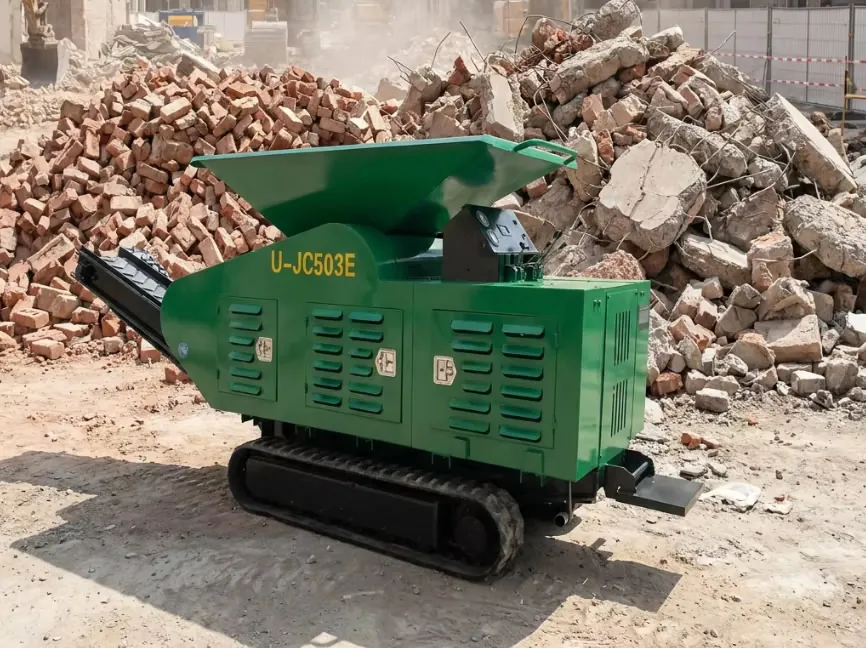
| Small site, foundations, landscaping | UJC425 / UJC503 / UJC503E | 6-30 t/h | Jaw (compact) |
| Tight-access urban jobs, rental fleets | UTC503 / UTC604 | 10-50 t/h | Trailer jaw (towable) |
Walk the jaw after the face and crush close to the shot. Haul finished product, not 800 mm rock. Fuel and tire savings show up within the first season on any haul longer than a few hundred meters.
Produce sub-base and drainage stone next to the alignment. A tracked plant follows the job instead of double-handling borrow material through a distant depot.
Impactor + magnet + screener. Clean 0-40 mm from demolition concrete is a product, not waste — same for asphalt millings. See our concrete recycling guide.
Tracked plants work on the slab; trailer plants where access is a city street and a ramp. Crush on site, cut truck movements and cut landfill tonnes. More on demolition waste crushing.
Trailer and compact tracked units earn money by moving. Utilization beats peak t/h on this kind of work — so do availability of wear parts and a 24-hour answer on spares.
Materials we regularly see through the range: limestone, granite, basalt, riverstone, reinforced concrete, brick and asphalt. If the feed is something else — slag, quarry overburden with clay, high-moisture claybound gravel — say so up front: clay and packing change feeder and chamber choice more than brochure t/h figures do.
How to choose the right crusher for your material and job.
How UJC704 / UJC805 tracked crushers turn demolition concrete into reusable 20-100 mm aggregate on site.
Read the guide →Jaw vs impact crushers for concrete, brick, asphalt and mixed C&D waste - 40 to 150 t/h.
Read the guide →A mobile crushing plant is not one machine: it is a primary crusher, a screener and one or more stacker conveyors working as a single tracked line. Because every unit in the line is mobile, the whole plant moves with the job instead of the material being trucked to a fixed plant. UPSEN builds all three stages, so the equipment is matched on capacity and discharge height before it leaves the factory.
The same line is also described as a portable crushing plant or a crawler mounted crushing plant. UPSEN builds tracked units for hard ground and wheeled units for road transport: the portable trailer jaw crushers UTC503 (10-30 t/h) and UTC604 (30-50 t/h) are the wheeled option.
Mobile Screener · Mobile Conveyor & Stacker · Trade Terms & Service
Send a manufacturer these six things before you ask for a price. A quote that arrives without them is guesswork.
Rock type or concrete / asphalt; maximum lump size; moisture; clay content; steel content.
Sizes (for example 0-20, 20-40, 40-70) and whether shape or flakiness is specified.
The t/h you actually need, not the brochure maximum. Loader size limits this.
Tracked or trailer; transport width and weight limits; urban noise rules.
Crusher only, or crusher + screen + magnet + conveyors as a full line.
Rental, 1,000 h a year, or double-shift quarry. The wear-part budget follows hours, not the color of the paint.
Capacity band. UPSEN covers the compact 6 t/h tracked UJC425 up to the 300 t/h tracked plants. Be honest about feed size: a “300 t/h” jaw on 200 mm clean limestone is not 300 t/h on 800 mm dirty reinforced concrete with rebar.
Engine and service. Cummins, Perkins and Deutz are specified because you can get filters and mechanics in most of the 80+ countries we ship to. That is a buying criterion, not a badge.
Remote control. One operator, one remote, tracking and crushing. On a demolition slab this is a safety item, not a gadget.
Wear parts. Jaws, blow bars, liners and feeder pans. Ask for a wear-part list and lead time, not just a crusher price — a cheap plant with 12-week bar delivery is an expensive plant.
Documents. EU conformity if the machine is going onto a European or similarly regulated site. Do not treat this as paperwork to sort out later.
Then ask for a price. When you have those answers, request a quote against a named model, not against the word “mobile crusher”.
Answers to the questions customers ask most before ordering a tracked mobile crusher.
Price depends on the model, engine configuration and options — the tracked range runs from the compact 6 t/h UJC425 up to the 300 t/h UJC106 / UJC116. Contact Carlsen Wang (WhatsApp +86 15333827088 or 15333827088@163.com) with your target capacity and material, and we will send a tailored quotation for the right model.
Hard, abrasive rock (granite, basalt) and demolition concrete with rebar call for a tracked jaw crusher (UJC series). Clean concrete, asphalt and medium-hard material where cubical product shape matters suit a tracked impact crusher (UIC80). Frequent site moves and tight access favour the compact UJC425 / UJC503 or the UTC trailer crushers. Send us material photos and your daily tonnage target and our engineers will match the model.
Yes. Our tracked jaw crushers are built for rebar-laced demolition concrete: compression squeezes the concrete off the steel, and the optional magnetic separator pulls the liberated rebar off the discharge belt. For impact crushing, we recommend removing heavy reinforcement before feeding to protect the blow bars.
Each model page lists full transport dimensions and weight — for example the UJC106 is 14.5 x 3.0 x 3.8 m at about 43 tons, while the compact UJC425 travels as a small tracked unit. Machines ship by flat-rack or container, fully assembled or knocked down depending on model and destination.
Yes. UPSEN mobile crushers are built in an ISO 9001:2015 certified factory with EU conformity documentation and are powered by Cummins, Perkins or Deutz diesel engines depending on model. We have delivered machines to customers in 80+ countries, with OEM spare parts support and remote after-sales service.
Throughput ranges from about 6 t/h (UJC425) up to 300 t/h (UJC106 / UJC116) depending on feed material, feed size and the closed-side discharge setting. Tell us your material and required output, and we will recommend the model with verified capacity figures for your conditions.
A crushing plant mounted on tracks or on a trailer that produces aggregate on site. Feed goes in, sized stone comes out, and the machine moves to the next face or the next contract — instead of the material being trucked to a fixed plant.
Tracked if you need to crawl on broken ground and stay on one larger job; trailer if you need road towing, tight urban access or rental utilization. UPSEN builds both: the tracked UJC / UIC range and the towable UTC503 / UTC604 trailer crushers.
On a prepared pad, commissioning is typically hours, not days. The delay is usually transport permits and a clear feed stockpile, not assembling the machine.
If you need more than one product size, or a spec with a tight top size, yes. Crusher setting alone is a blunt tool. A mobile screener closes the circuit and sends oversize back to the crusher.
With correct operation and wear-part discipline, 10-20 years is a realistic working life for the frame and chassis. Abuse and late liner changes are what shorten it. We keep OEM wear parts available for the models we ship.
Tell us your project · We respond within 24 hours
If you already know the feed, the product sizes and the t/h, we can name a model. If you do not, send photos of the material and your maximum lump size.
Quality & compliance: ISO 9001:2015 quality management · EU conformity documentation verified by three independent bodies · EN ISO 3744:2010 noise tested, LWA 91 dB(A)